Sleep
Sleep and Your Skin: Simple Night Habits Worth Keeping
Good sleep shows up in how you feel and often in how you look. Here are evidence-based habits for better nights in midlife.

"Beauty sleep" sounds like a cliché, but sleep really does affect how we feel, how we look and how we handle stress. And for many people, sleep gets harder in midlife.
How much sleep do you need?
Most adults need at least 7 hours a night, according to the CDC and the National Heart, Lung, and Blood Institute. That need does not shrink as we get older, even though sleep often becomes lighter and more broken.
Why sleep can get harder after 40
The National Institute on Aging notes that older adults often go to bed and wake up earlier and wake more during the night. Hot flashes, needing to use the bathroom, pain, some medications and stress can all play a part.
Night habits that help
From the NIA's tips for a good night's sleep:
- Go to bed and get up at the same time every day, including weekends.
- Avoid caffeine late in the day and large meals close to bedtime.
- Keep your bedroom dark, quiet and cool, and keep screens out of bed.
- Build a calming routine: a warm bath, reading or gentle stretching.
- Get some daylight and physical activity earlier in the day.
A small bonus for your skin
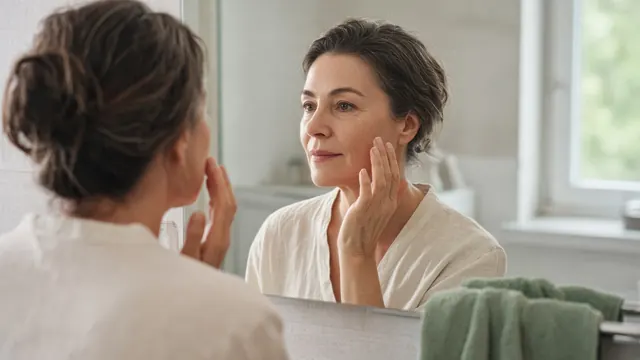
Night is a good time for skin care, too. A gentle cleanser and a moisturizer applied before bed help skin that tends to get drier with age. If you use a retinoid, that is usually an evening step.
If you snore loudly, stop breathing during sleep or feel exhausted despite enough time in bed, talk with your doctor. These can be signs of a sleep disorder that is worth treating.
- Centers for Disease Control and Prevention. About Sleep
- National Heart, Lung, and Blood Institute (NIH). How Much Sleep Is Enough?
- National Institute on Aging (NIH). Sleep and Older Adults
- National Institute on Aging (NIH). A Good Night's Sleep