SkinAdvertorial
Why Skin Changes So Much After 40, and the Collagen Gummy Many Women Are Asking About
If your skin started to feel different somewhere in your 40s, you are not imagining it. Here is what changes, what the research on collagen says, and a plain look at one gummy that is getting a lot of attention.
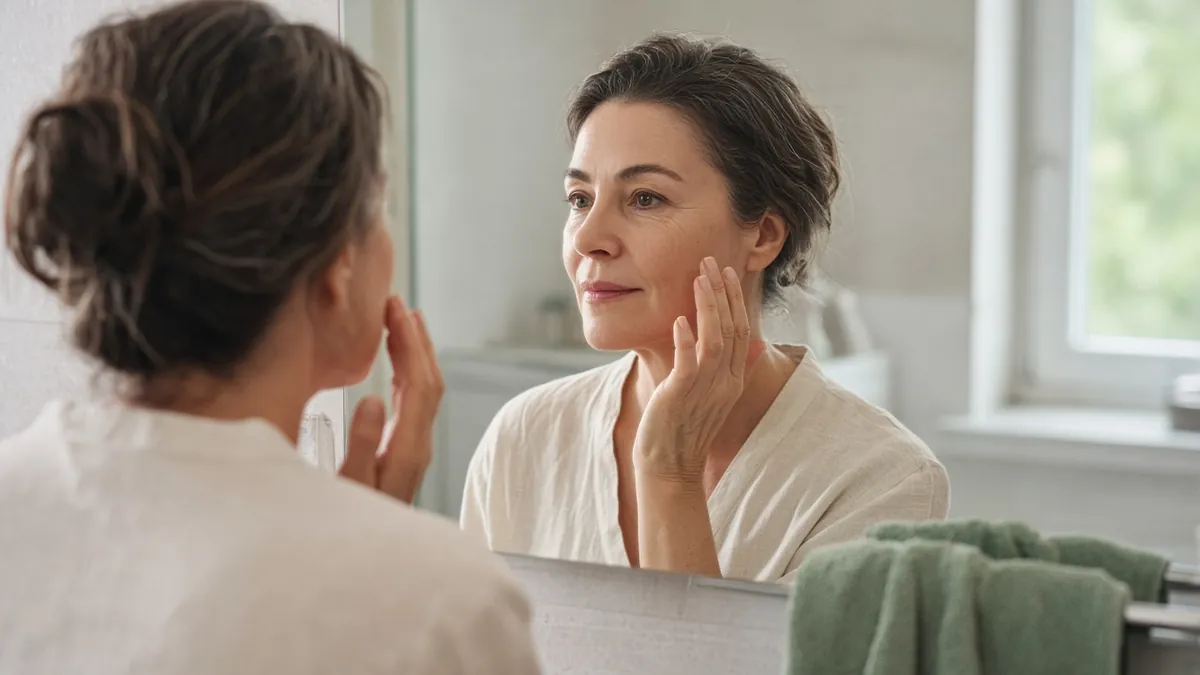
It often starts with something small. Foundation that used to glide on now settles into lines. The skin on your cheeks looks a little less springy in photos. Moisturizer you have used for years suddenly does not seem to be enough.
Many women notice these shifts in their 40s and 50s, and there is a real reason behind them. That is good news in a way: once you understand what is happening, it is easier to decide what is worth your time and money, and what is not.
What is actually changing
Collagen is the protein that gives skin much of its structure and bounce. According to the American Academy of Dermatology, skin can lose a significant amount of collagen in the first years after menopause, as estrogen levels fall. Skin also tends to get drier and slower to bounce back.
Sun exposure over the decades adds to it. That is why dermatologists still put daily sunscreen at the top of every list, even if it is the least exciting advice you will ever hear.
Why "collagen from the inside" became a trend
Creams work on the surface. So a growing number of women have started looking at collagen supplements, which are meant to supply the building blocks the body uses to make its own collagen.
The research here is more interesting than you might expect, but it is also more modest than the ads usually suggest. A 2021 meta-analysis of 19 randomized trials, mostly in women, found that hydrolyzed collagen was associated with improvements in skin hydration and elasticity compared with placebo over about 90 days. At the same time, Harvard's Nutrition Source points out that many of these studies were small, short and funded by manufacturers.
So the honest summary is: collagen is one of the better-studied skin supplements, results tend to be gradual and modest, and it works best as part of a routine, not as a replacement for one.
See if Gelagen is right for you →Opens the seller's official presentation in a new tab.
Meet Gelagen
One product many women have been asking us about is Gelagen, a collagen gummy marketed to women roughly 40 to 75. Instead of a powder you have to mix, it is a gummy taken twice a day: one in the morning with a glass of water and one before bed, according to the seller.
Here is what the seller says is inside:
- Marine collagen, which the seller says comes from jellyfish. Collagen is the ingredient with the most research behind it.
- PDRN (polydeoxyribonucleotide), a DNA-derived ingredient usually sourced from salmon. It is used in some cosmetic clinics; research on taking it by mouth is still limited.
- Resveratrol, a plant antioxidant found in grape skins and some berries. Evidence for skin when taken by mouth is limited.
- Vitamin C, which your body genuinely needs to make collagen, as the NIH Office of Dietary Supplements explains.
We like that the routine is simple, and that the seller describes the purchase as a one-time payment with no subscription, plus an advertised refund guarantee. Gelagen is sold in 2, 3 and 6-bottle kits. As always, confirm the price, the Supplement Facts panel and the refund terms on the official page before you order.
Who should skip it, or ask first
Because the ingredients are marine and salmon-derived, Gelagen is not a fit for people with a fish or seafood allergy, or for vegetarians and vegans. Resveratrol may interact with blood thinners and some other medications. If you are pregnant or breastfeeding, have kidney disease, take prescription medicines, or want help with a specific skin condition, talk with your doctor or a dermatologist first.
Setting realistic expectations
No supplement can turn back the clock, and anyone promising that is overselling. Supplements are not reviewed by the FDA for effectiveness before they are sold, and Gelagen itself has not been tested in published studies that we know of. What a collagen gummy can reasonably be is one easy piece of a routine that also includes sunscreen, sleep, protein and fruits and vegetables.
If that sounds like the kind of small daily habit you would actually stick with, the seller has put together a free presentation that explains the formula and the thinking behind it. It is worth watching with a critical eye and then deciding for yourself.
Watch the free presentation →Opens the seller's official presentation in a new tab.
Prefer to read more first? See our articles on what changes in skin after 40 and vitamin C, protein and your skin.
Individual results vary. Gelagen is a dietary supplement; it is not intended to diagnose, treat, cure or prevent any disease. These statements have not been evaluated by the Food and Drug Administration.
- American Academy of Dermatology. Skin care during menopause
- PubMed. de Miranda RB, et al. Effects of hydrolyzed collagen supplementation on skin aging: a systematic review and meta-analysis. Int J Dermatol. 2021
- The Nutrition Source, Harvard T.H. Chan School of Public Health. Collagen
- NIH Office of Dietary Supplements. Vitamin C: Fact Sheet for Consumers
- U.S. Food and Drug Administration. Dietary Supplements
- NIH Office of Dietary Supplements. Dietary Supplements: What You Need to Know