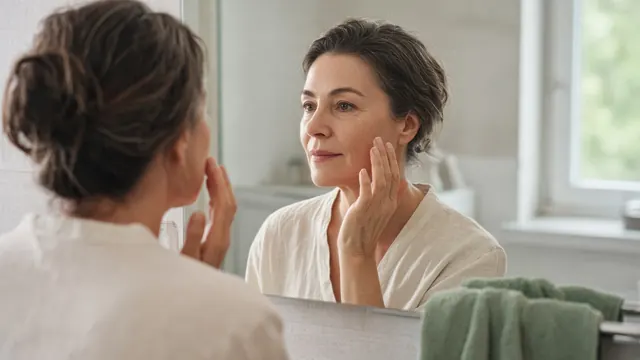
Skin
What Actually Changes in Your Skin After 40
Dryness, fine lines and a little less bounce are common in midlife. Here is why, and the basics that matter most.

Skin changes gradually, so most of us notice it all at once: a photo, a new line, a moisturizer that no longer feels like enough. Understanding the reasons makes it easier to choose habits that actually help.
Less collagen, less moisture
Collagen gives skin its firmness. The American Academy of Dermatology notes that skin loses a significant amount of collagen in the first years after menopause. Lower estrogen also means skin tends to hold less moisture, which is why many women find their skin feels drier and more easily irritated than it used to.
Decades of sun add up
Much of what we think of as "aging skin", such as uneven tone, rough patches and deeper lines, is related to years of sun exposure. That is why protection from the sun is still the single most recommended habit, at any age.
What dermatologists suggest in your 40s and 50s
The AAD's guide to skin care in your 40s and 50s keeps it simple:
- Use a broad-spectrum sunscreen with SPF 30 or higher every day, even when it is cloudy.
- Switch to a gentle cleanser and a richer moisturizer if your skin feels dry or tight.
- Apply moisturizer to damp skin to help lock in water.
- Ask about a retinoid, one of the best-studied options for fine lines.
- Check your skin for new or changing spots, and see a dermatologist if something looks different.
The basics outside the bathroom
Sleep, not smoking, eating enough protein and plenty of fruits and vegetables all support healthy skin. None of them are dramatic, and that is the point: small habits you keep for years do more than any single product.
Curious about collagen supplements? Read our plain look at collagen gummies and Gelagen, or our guide to vitamin C, protein and your skin.
- American Academy of Dermatology. Skin care during menopause
- American Academy of Dermatology. Skin care in your 40s and 50s