Nutrition
Vitamin C, Protein and Your Skin: What Your Plate Can Do
Before you spend money on skin supplements, make sure the basics are covered. Your plate does more for your skin than you might think.
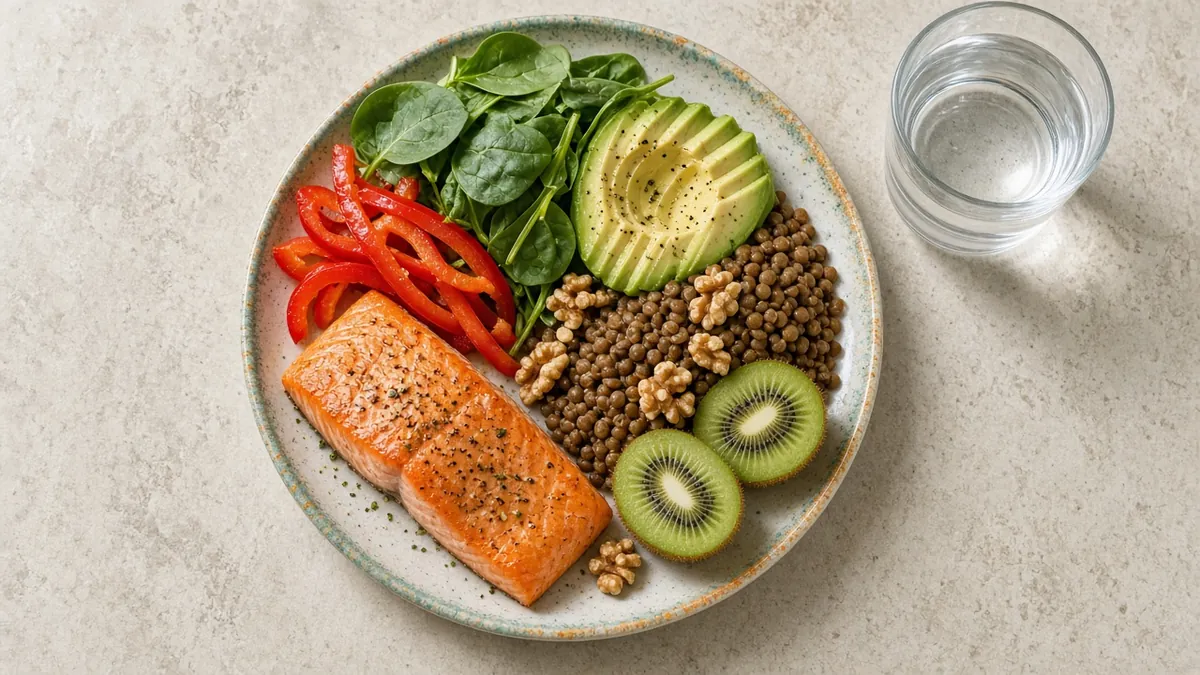
Collagen is made inside your body, and the raw materials come from food. Two nutrients matter most: protein, which supplies the amino acids, and vitamin C, which the body needs to assemble collagen.
Vitamin C: easy to get from food
The NIH Office of Dietary Supplements lists 75 mg a day as the recommended amount for adult women and 90 mg for men. That is easier to reach than it sounds:
- Half a cup of raw red bell pepper: about 95 mg
- One medium orange: about 70 mg
- One medium kiwi: about 64 mg
- Half a cup of sliced strawberries: about 49 mg
Smokers need an extra 35 mg a day, according to the ODS.
Protein: spread it through the day
Fish, eggs, poultry, dairy, beans, lentils, tofu and nuts all supply the amino acids your body uses to make collagen and other proteins. Many people eat most of their protein at dinner; adding some at breakfast and lunch is an easy upgrade.
What about collagen supplements?
Hydrolyzed collagen has more research than most skin supplements. A 2021 meta-analysis found modest improvements in skin hydration and elasticity, while Harvard's Nutrition Source cautions that many studies were small and industry-funded. If you are curious, we took a plain look at one collagen gummy many women ask about.
Before you buy any supplement
The ODS guide to supplements suggests checking the label, being wary of big promises, and telling your doctor or pharmacist what you take, especially if you use prescription medicines.
- NIH Office of Dietary Supplements. Vitamin C: Fact Sheet for Consumers
- PubMed. de Miranda RB, et al. Effects of hydrolyzed collagen supplementation on skin aging: a systematic review and meta-analysis. Int J Dermatol. 2021
- The Nutrition Source, Harvard T.H. Chan School of Public Health. Collagen
- NIH Office of Dietary Supplements. Dietary Supplements: What You Need to Know